Sustainability is no longer a future consideration for packaging manufacturers. It is now a core business requirement. Governments worldwide are introducing new regulations designed to reduce waste, increase recycling rates, improve transparency, and encourage a circular economy.
For packaging manufacturers, staying compliant can be challenging. Regulations vary between countries, reporting requirements are becoming more complex, and businesses must manage increasing amounts of product and packaging data.
Failure to comply can result in financial penalties, reputational damage, supply chain disruption, and even restrictions on selling products in certain markets.
In this article, we explore five key sustainability regulations packaging manufacturers should comply with and explain how effective data management can make compliance significantly easier.
Why Sustainability Regulations Are Transforming the Packaging Industry
The packaging industry sits at the centre of many sustainability initiatives. Packaging waste remains a major environmental concern, prompting governments and regulators to introduce stricter rules governing how packaging is designed, manufactured, labelled, and disposed of.
At the same time, consumers are demanding more sustainable products and greater transparency about the environmental impact of packaging.
As a result, manufacturers must now demonstrate compliance across multiple areas, including recyclability, recycled content, material traceability, and sustainability reporting.
Businesses that invest in strong compliance processes today will be better positioned to adapt as regulations continue to evolve.
Understanding the Global Shift Towards Sustainable Packaging
What Is Driving New Packaging Regulations?
Several factors are accelerating regulatory change:
- Growing environmental concerns around waste and pollution
- National and international climate targets
- Circular economy initiatives
- Consumer demand for sustainable products
- Pressure on businesses to improve transparency
Governments increasingly expect manufacturers to take responsibility for the environmental impact of their packaging throughout its lifecycle.
Why Packaging Manufacturers Must Stay Ahead
Waiting until regulations become mandatory often leads to rushed implementation, increased costs, and greater compliance risk.
Manufacturers that proactively prepare can:
- Reduce compliance costs
- Improve operational efficiency
- Strengthen customer trust
- Gain competitive advantages
- Avoid regulatory penalties
1. Extended Producer Responsibility (EPR) Regulations
What Is Extended Producer Responsibility?
Extended Producer Responsibility (EPR) is a policy approach that makes producers responsible for the collection, recycling, and disposal of packaging waste.
Rather than placing the burden solely on local authorities, EPR schemes require businesses that introduce packaging to the market to contribute financially to waste management systems.
Key EPR Requirements for Packaging Manufacturers
Packaging manufacturers and brand owners may need to:
- Register with relevant authorities
- Report packaging data
- Track packaging materials
- Calculate packaging volumes
- Pay compliance fees
Accurate reporting is essential because costs are often linked to the quantity and type of packaging placed on the market.
EPR Developments Across Major Markets
EPR programmes are expanding globally.
The European Union continues to strengthen producer responsibility obligations, while the United Kingdom has introduced significant EPR reforms. Similar schemes are also becoming more common across North America and other regions.
Common EPR Compliance Challenges
Many organisations struggle with:
- Collecting packaging data from multiple systems
- Tracking material compositions
- Managing reporting deadlines
- Maintaining data accuracy
Without a centralised source of packaging information, compliance becomes difficult and time-consuming.
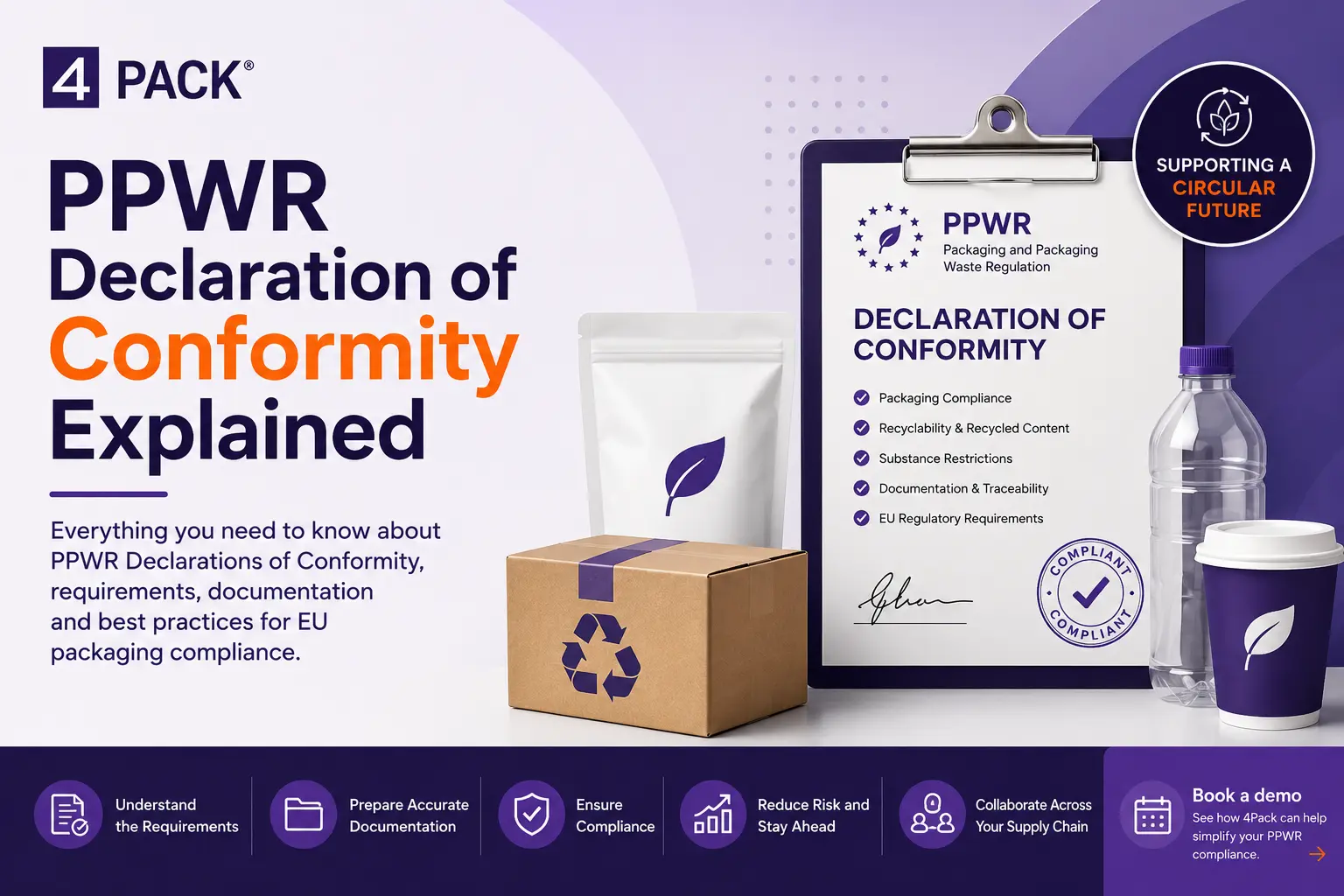
2. The EU Packaging and Packaging Waste Regulation (PPWR)
What Is PPWR?
The Packaging and Packaging Waste Regulation (PPWR) is one of the most significant sustainability initiatives affecting packaging manufacturers operating within the European Union.
The regulation aims to reduce packaging waste while improving recyclability and resource efficiency.
Key PPWR Requirements for Manufacturers
Packaging Reduction Targets
Manufacturers will be expected to minimise unnecessary packaging and reduce overall packaging waste.
Recyclability Requirements
Packaging must increasingly be designed with recycling in mind. Materials that cannot be effectively recycled may become restricted.
Recycled Content Requirements
Many packaging types will need to contain minimum levels of recycled material.
Reuse and Refill Obligations
Certain sectors will face requirements relating to reusable and refillable packaging systems.
How PPWR Will Impact Packaging Design and Development
PPWR is expected to influence every stage of packaging development.
Manufacturers will need detailed visibility into:
- Material selection
- Packaging specifications
- Recycled content levels
- Environmental performance
Compliance will require close collaboration between packaging, sustainability, and regulatory teams.
Preparing for PPWR Compliance
Organisations should begin reviewing packaging portfolios now and ensure they have systems capable of managing detailed packaging data.
3. Plastic Packaging Tax Regulations
Understanding Plastic Packaging Taxes
Plastic Packaging Taxes are designed to encourage the use of recycled materials and reduce reliance on virgin plastics.
These schemes impose financial penalties on packaging that does not meet specific recycled content thresholds.
The UK Plastic Packaging Tax
The UK Plastic Packaging Tax applies to plastic packaging manufactured or imported into the UK that contains less than 30% recycled plastic.
Who Must Comply?
Businesses that manufacture or import qualifying plastic packaging may be required to register and report.
Reporting Requirements
Organisations must maintain accurate records showing:
- Packaging weights
- Material composition
- Recycled content percentages
- Exemptions and supporting evidence
- Recycled Content Thresholds
Demonstrating compliance requires reliable data regarding the materials used within each packaging component.
Similar Initiatives Emerging Worldwide
Many countries are considering or implementing similar measures, making recycled content tracking increasingly important for global manufacturers.
How Accurate Material Data Supports Compliance
Without accurate specification data, manufacturers may struggle to demonstrate compliance or justify exemptions during audits.
Centralised data management significantly reduces this risk.
4. Corporate Sustainability Reporting Directive (CSRD)
What Is the CSRD?
The Corporate Sustainability Reporting Directive (CSRD) introduces expanded sustainability reporting requirements for thousands of businesses operating within Europe.
The directive requires organisations to provide detailed disclosures regarding environmental, social, and governance performance.
Why Packaging Manufacturers Should Care
Packaging plays an important role in sustainability reporting.
Customers, investors, and regulators increasingly expect businesses to provide transparent information regarding:
- Packaging materials
- Resource consumption
- Waste reduction initiatives
- Recycling performance
- Sustainability Data Required Under CSRD
- Environmental Metrics
Businesses must report environmental impacts and sustainability performance indicators.
Supply Chain Transparency
Organisations are expected to demonstrate visibility throughout their supply chains.
Packaging Sustainability Reporting
Packaging-related metrics may form part of broader sustainability disclosures.
Building Reliable Sustainability Reporting Processes
Strong sustainability reporting depends on accurate and accessible data.
Businesses relying on spreadsheets and disconnected systems often struggle to gather the information required for comprehensive reporting.
5. Digital Product Passport (DPP) Requirements
What Is a Digital Product Passport?
The Digital Product Passport (DPP) is an emerging initiative designed to improve transparency throughout product lifecycles.
A DPP provides detailed digital information about products and packaging, making it easier to understand environmental performance and support circular economy goals.
How DPPs Will Affect Packaging Manufacturers
Manufacturers may need to provide significantly more information regarding packaging composition and sustainability credentials.
Information Required in a Digital Product Passport
Material Composition
Detailed information regarding materials and components.
Recyclability Information
Data demonstrating how packaging can be recycled.
Supply Chain Traceability
Visibility into sourcing and production processes.
Sustainability Credentials
Information supporting environmental claims.
Why Centralised Product Data Will Be Essential
Digital Product Passports depend on high-quality data.
Businesses without structured product information systems may find compliance extremely difficult as DPP requirements become more widespread.
How 4Pack Helps Packaging Manufacturers Stay Compliant
Sustainability compliance is ultimately a data challenge. Most regulations require businesses to collect, manage, verify, and report detailed information about products and packaging. The greater the regulatory burden becomes, the more important effective data management becomes.
4Pack provides manufacturers with a structured platform for managing packaging specifications, regulatory information, sustainability data, and product records from a single location.
Rather than relying on spreadsheets, disconnected databases, and manual processes, teams can access trusted information through one central system. This reduces duplication, improves consistency, and makes compliance reporting significantly more efficient.
The platform also supports stronger governance through version control and change management functionality. Every update can be tracked, helping businesses maintain a complete audit trail and demonstrate compliance when required.
As sustainability regulations continue to evolve, organisations need systems that can adapt alongside them. 4Pack helps manufacturers build the data foundations necessary to support both current compliance obligations and future regulatory requirements. Book your demo today!