Packaging regulations are changing fast. New rules in the UK and the EU are landing close together, and other markets are following. For many manufacturers, 2027 is where it all comes to a head.
We have said before that The Clock is Striking. Immediate action now is pivotal.
This article looks at the packaging regulations that matter most, why they should be a business priority and how you must prepare.
Why 2027 Matters for Packaging Manufacturers
Regulations rarely arrive one at a time. Fees, reporting duties, labelling rules and design targets now overlap. Each one relies on accurate data.
The risks are clear:
- Fines and enforcement action
- Lost access to key markets
- Higher producer fees
- Pressure from retailers and brand owners
Customers are also asking tougher questions. They want proof that your packaging is compliant. Slow or patchy answers can cost you contracts.
UK Packaging Regulations: What to Watch
The UK is now firmly in the implementation and payment phase. Three schemes are particularly important.
Extended Producer Responsibility (EPR)
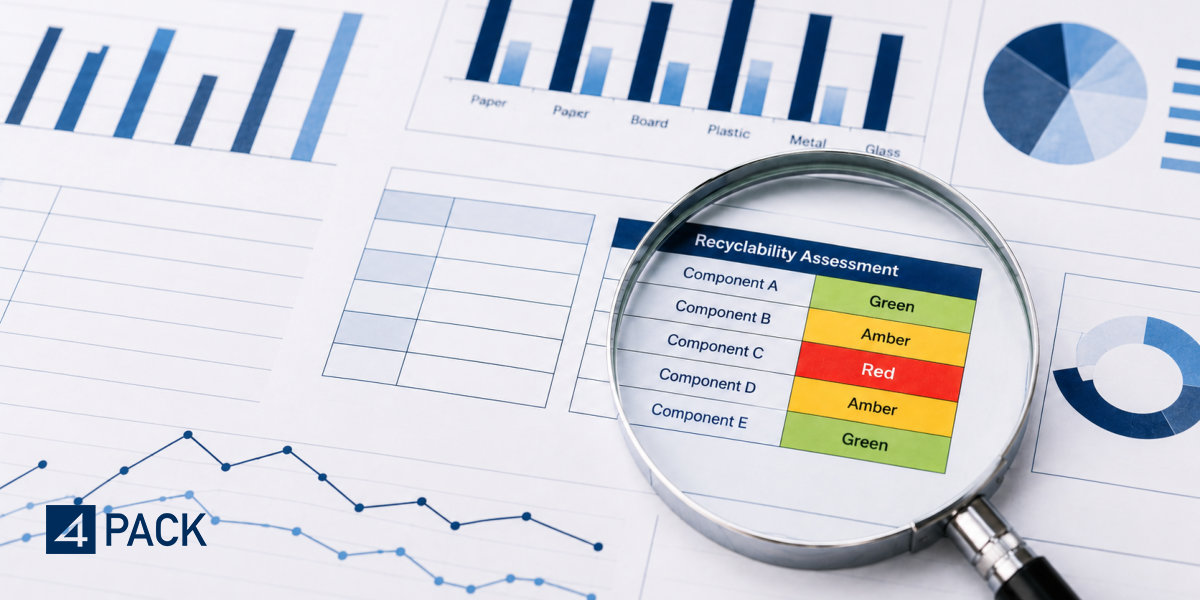
Under EPR, obligated large producers pay waste disposal fees for relevant household packaging they supply or import. Recyclability is assessed using the red, amber and green RAM ratings, which influence the fees producers pay
Accurate data and evidence are essential. If the information needed to support a recyclability assessment is unavailable, packaging can be rated red, resulting in higher modulated fees.
Deposit Return Scheme (DRS)
The UK Deposit Return Scheme launches on 1 October 2027. Eligible single-use PET plastic, aluminium and steel drinks containers between 150ml and 3 litres will carry a 20p refundable deposit.
Producers must register with Exchange for Change, pay producer fees and meet product registration, barcode and labelling requirements. Business registration is already under way, with more detailed Phase 2 registration starting in January 2027. Wales will also include glass from launch, although glass will carry a zero-pence deposit and be exempt from DRS labelling during a four-year transition period.
Plastic Packaging Tax
Plastic Packaging Tax continues to apply to finished plastic packaging containing less than 30% recycled plastic. From 1 April 2027, businesses will be able to use a certified mass-balance approach to account for chemically recycled plastic. From the same date, pre-consumer plastic waste will no longer count as recycled content for PPT purposes. Clear evidence of recycled content will therefore become even more important.
EU Packaging Regulations: What to Watch
The EU Packaging and Packaging Waste Regulation (PPWR) now applies directly across the EU, creating a much more harmonised set of packaging rules. However, some national differences remain, particularly around enforcement, producer responsibility and implementation where the Regulation gives Member States discretion.
What Applies Now
Since 12 August 2026, manufacturers placing packaging on the EU market must carry out the required conformity assessment and draw up technical documentation and an EU Declaration of Conformity, subject to limited exceptions. The PFAS restrictions for food-contact packaging also now apply.
In practice, businesses need reliable packaging specifications and supplier evidence to demonstrate that each packaging type meets the requirements that apply to it. UK businesses are not outside the scope simply because they are based outside the EU. Where their packaging or packaged products are placed on the EU market, PPWR requirements can apply, with additional responsibilities falling on EU importers and, in some circumstances, authorised representatives.
What Lands in 2027?
There is no major new general packaging-design milestone starting automatically in 2027, but several important PPWR implementation measures and business obligations do land during the year.
From 12 February 2027, HORECA businesses selling hot or cold drinks or ready-prepared food in takeaway packaging must allow customers to bring their own containers, at no higher cost and under no less favourable conditions.
What Follows
Harmonised material-composition labelling applies from 12 August 2028, or 24 months after the relevant implementing acts enter into force, whichever is later. Design-for-recycling requirements and minimum recycled-content requirements then apply from 1 January 2030 at the earliest, with their exact application dates dependent on the relevant delegated and implementing acts.
Beyond the UK and the EU: The International Picture
The UK and EU are not alone. Similar rules are spreading worldwide.
No federal packaging EPR law exists in the US, but seven states have enacted their own. California’s broader programme is scheduled to begin in January 2027, although legal challenges continue.
Packaging and paper EPR requirements are also widespread in Canada, with regulations currently in place in eight provinces plus Yukon territory.
The details differ, but the themes match:
- Recyclability
- Recycled content
- Clear labelling
- Transparent reporting
So, treat your markets as one system. A joined-up approach beats building a new process for each country.
The Real Challenge: Packaging Data and Artwork
Most compliance problems start with data. Material types, weights and recycled content often sit in spreadsheets. Suppliers send updates by email. Teams work in silos.
Then the problems stack up:
- Reports take too long to build
- Errors slip through
- Fee calculations are unreliable
- Artwork carries outdated claims or symbols
That last point matters most. A compliant pack needs compliant artwork. If your data and design are not linked, mistakes reach the shelf. Relabelling and recalls are costly.
Your 2027 Readiness Checklist
Ask yourself:
- Do we know which UK and EU rules apply to each product?
- Is our packaging data in one trusted place?
- Can we report by material, weight and recyclability fast?
- Do suppliers give us the data we need?
- Does our artwork approval process check compliance?
If you answered “no” to any of these, you have work to do. The sooner you start, the easier it will be.
Ready To Start Your Countdown?
Packaging regulations will not get simpler. Managing them can be.
4Pack’s cloud-based platform brings your product and packaging data, compliance needs and artwork management together in one place. You can respond to change with confidence, not scramble to catch up.
Book a demo to see how 4Pack can help you get ready for 2027 and beyond.
Key Dates for 2027
| Date | What happens | Region |
| January 2027 | California’s broader packaging EPR programme begins (legal challenges pending) | US (international) |
| 12 February 2027 | Member States must set PPWR penalty rules (Article 68) | EU |
| 12 February 2027 | Takeaway sellers must allow customers’ own containers (Article 32) | EU |
| April 2027 | Mass balance for chemical recycling allowed under the Plastic Packaging Tax | UK |
| 9 July 2027 | Deadline to register in-scope drinks containers | UK |
| 1 October 2027 | UK DRS launches: 20p deposit on eligible PET, aluminium and steel containers. | UK |