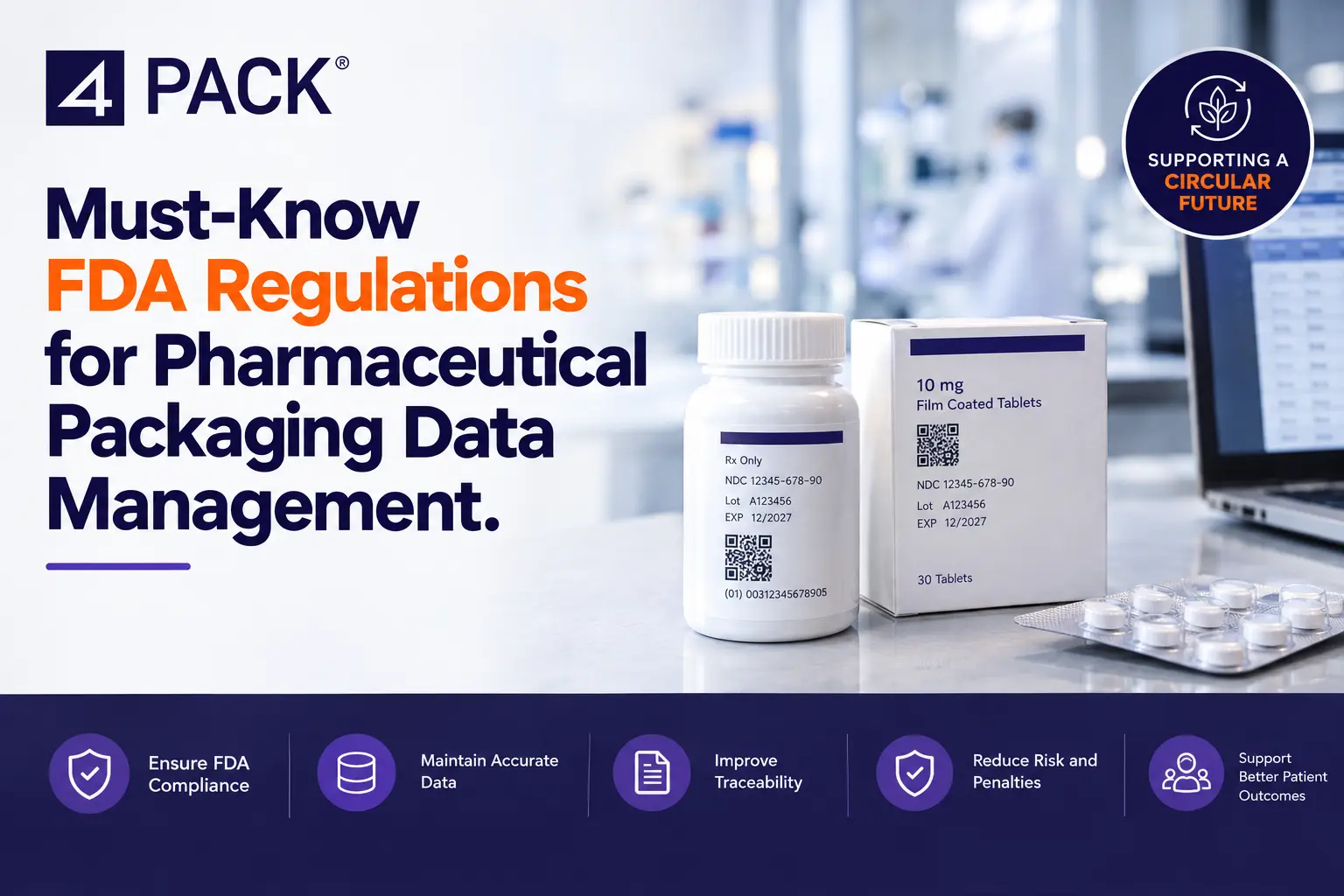
For pharmaceutical companies, packaging is never just packaging. It’s a regulated product component tied directly to patient safety, product identity, and legal market access.
Get the data behind it wrong, and the consequences aren’t cosmetic – they’re product recalls, warning letters, and lost time-to-market.
The FDA’s rules on packaging and labelling are detailed and they’re evolving. For teams managing data across multiple products, markets, and packaging formats, staying compliant means more than knowing the regulations exist. It means having the systems in place to track, verify, and update packaging data at speed.
Here’s what pharmaceutical manufacturers need to know right now.
1. 21 CFR Part 211, Subpart G: The Foundation
Part 211 sets out Current Good Manufacturing Practice (cGMP) for finished pharmaceuticals, and Subpart G deals specifically with packaging and labelling control. It covers everything from label reconciliation to preventing mix-ups between similar packaging materials.
In practice, this means your packaging specification data has to be accurate, controlled, and traceable back to an approved version at every stage. A spreadsheet that’s out of sync with the latest approved artwork isn’t just an inconvenience – it’s a compliance gap.
2. The Drug Supply Chain Security Act (DSCSA)
DSCSA requires product identification, tracing, and verification across the pharmaceutical supply chain. Every saleable unit needs a unique serial number and that data has to be captured, shared, and verified as the product moves from manufacturer to dispenser.
For packaging teams, this means serialisation data and packaging specification data can’t live in separate systems. If your artwork changes, your serialisation setup needs to reflect that immediately across every market where the product ships.
3. The New 12-Digit NDC Format
This is the one to watch in 2026. The FDA has finalised a move to a uniform 12-digit National Drug Code (NDC) format, replacing the current mixed 10-digit structure. The compliance deadline sits several years out, but the preparation window opened in March 2026.
For any business running long product lifecycles or planning system upgrades, this isn’t a future problem. Packaging, labelling, and data systems need to start accounting for the new format now, well ahead of the deadline, to avoid a scramble later.
4. 2D Barcode and Traceability Requirements
Linked closely to DSCSA, the shift toward 2D barcodes on packaging supports more detailed product traceability, including the data needed for serialisation and verification. Packaging design and data management need to work together here.
A barcode is only useful if the data behind it is accurate and current.
5. 21 CFR Part 11: Electronic Records and Signatures
Most packaging and labelling data now lives in digital systems, not paper files. Part 11 sets the standard for electronic records and signatures, covering audit trails, access controls, and record integrity.
This matters enormously for any business relying on shared platforms for artwork approval and packaging sign-off. If your system can’t produce a clear, tamper-evident audit trail showing who approved what and when, you have a compliance risk sitting inside your everyday workflow.
6. Keeping Labelling Aligned with Approved Prescribing Information
Every label has to match the FDA-approved prescribing information, and post-market safety updates need to be reflected within mandated timeframes. This sounds straightforward, but it’s one of the most common failure points in pharma labelling audits. Outdated safety information on a label, even a minor omission, can trigger regulatory action.
Where Compliance Breaks Down
Across the pharmaceutical sector, the same issues come up repeatedly:
- Packaging specification data and artwork stored in disconnected systems or spreadsheets
- No single source of truth for the latest approved version
- Manual processes for cross-checking serialisation, labelling, and regulatory data
- Limited visibility for regulatory, quality, and artwork teams working on the same product
- Missed deadlines for post-market label updates, simply because no system flagged the change
None of these are regulatory problems on paper. They’re data management problems that turn into regulatory problems.
What Good Packaging Data Management Looks Like
The businesses that handle this well share a few common traits:
- A single source of truth. Packaging specifications, artwork, and regulatory data live in one place, not scattered across teams and file versions.
- Full version control and audit trails. The system tracks, timestamps, and attributes every change, satisfying Part 11 requirements without extra manual effort.
- Cross-functional visibility. Regulatory, quality, and artwork teams work from the same live data, rather than passing files back and forth and hoping nothing slips through.
- Built-in regulatory awareness. The system flags and actions changes like the NDC format update or new labelling requirements before they become urgent.
This is precisely the gap that centralised packaging data management platforms are built to close, replacing fragmented systems with one connected, auditable source of truth across the entire product and packaging lifecycle.
Ready to See This in Practice?
Navigating FDA packaging and labelling requirements shouldn’t mean juggling spreadsheets, chasing approvals, and hoping nothing slips through the cracks. With our solution, your packaging specification data, artwork, and compliance records live in one centralised, auditable platform. This provides your regulatory, quality, and artwork teams the visibility they need to move fast and stay compliant.
Book a demo with 4Pack today and see how our platform can help your business simplify FDA compliance, reduce risk, and bring products to market with confidence.
Finally, check out our case study that demonstrates how our solution adds value in highly-regulated pharmaceutical markets.